
E-commerce-like experience for data discovery

  • Nov 12, 2024 3:33 PM UTC
  • 1 reply
  • 118 views
  • Translate All

Hello Community,

Do you see resemblance? 🧐
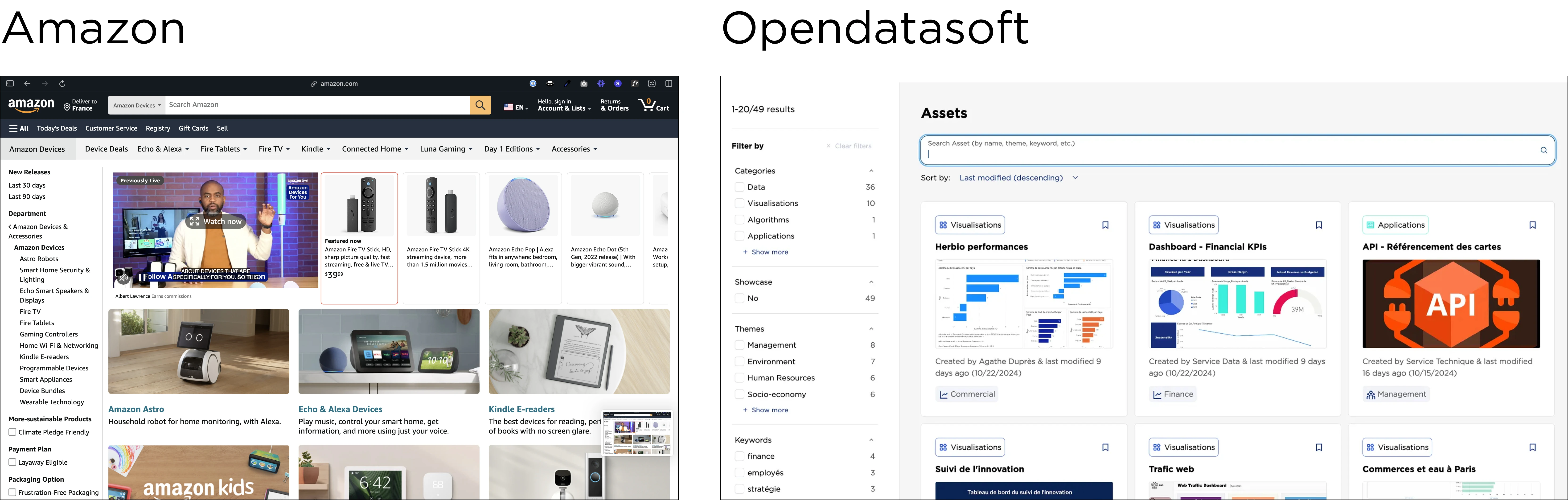
→ Almost the same, only the data assets don’t have any price tags!

Discovering data assets through an e-commerce-like interface feels familiar and makes data more accessible to non-technical users. This is precisely our goal.

Auto-translation đŸȘ„

Bonjour la communautĂ©,Voyez-vous une ressemblance ? 🧐→ Presque la mĂȘme chose, seules les donnĂ©es n'ont pas d'Ă©tiquette de prix ! DĂ©couvrir des donnĂ©es via une interface de type e-commerce semble familier et rend les donnĂ©es plus accessibles aux utilisateurs non techniques. C'est prĂ©cisĂ©ment notre objectif.

1 reply

clo
Huwise Team
Forum|alt.badge.img+2
  • Huwise Team
  • Nov 12, 2024 4:57 PM UTC

Exactly! You can also compare this to Netflix: when the user chooses the next comedy, they go through a few steps:

  1. They search via the search bar (or via a category of movies and shows).
  2. Then they read the description or watch the trailer.
  3. And only then do they decide if they play or not.

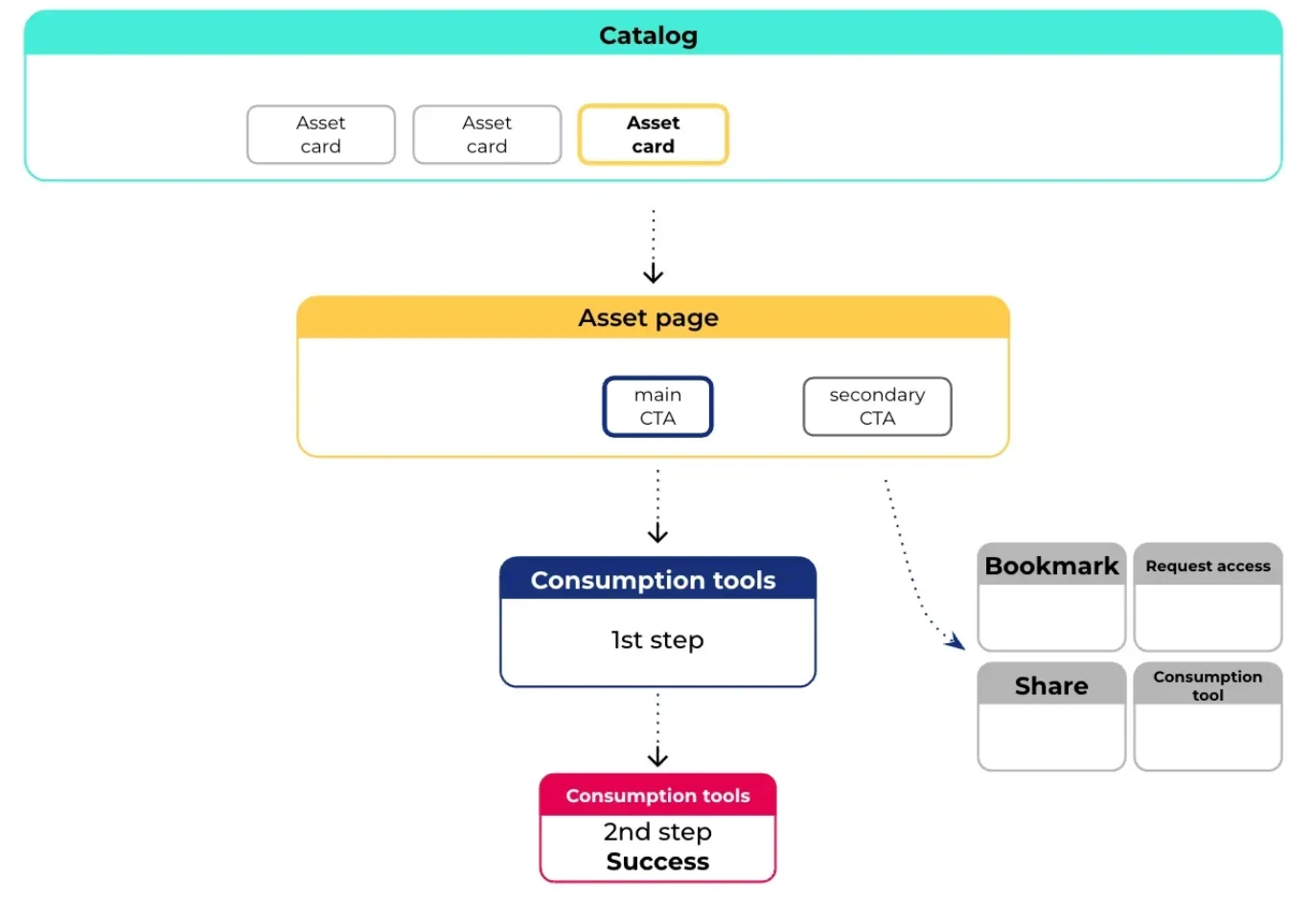
The same applies to your data assets. We call this step-by-step data discovery the asset conversion funnel. Look:

Step 1, “Discovery”

  • Finding relevant data assets via Intelligent search.
  • Each data asset card offers a brief description.
  • A click on the card takes users to the asset page.

Step 2, “Evaluation”

  • The Asset page shows detailed metadata: the asset’s description, owner, last update, etc.
  • This information helps users decide whether to proceed. They decide their next move via clear CTAs (Call to Action).

Step 3, “Data consumption”

  • The end result: data consumption. The user downloads, exports the asset, accesses its API etc.
  • Or they take another action with the asset, such as bookmark it or share it with other data consumers.


Translate